
The One Binder Method gives your child one main place for school papers, with a pocket for work that needs attention and a section for each subject. A short check at the end of the day is part of the system.
If you've emptied a backpack and found last week's homework under a lunch container, start there. Which paper needed to come home? Where could it have gone when your child first received it?
You can work on that one step together. The aim is to make papers easier to find, use and hand in.
Check what school requires first
Before you buy supplies, ask which subjects need their own notebook or binder. Check what stays at school, what travels home and how online work is assigned.
One binder won't suit every timetable. Two smaller binders may work better for a full course load or a school with alternating days. Keep a teacher's required system where needed. A binder also needs to be a size and weight your child can manage.
What you'll need
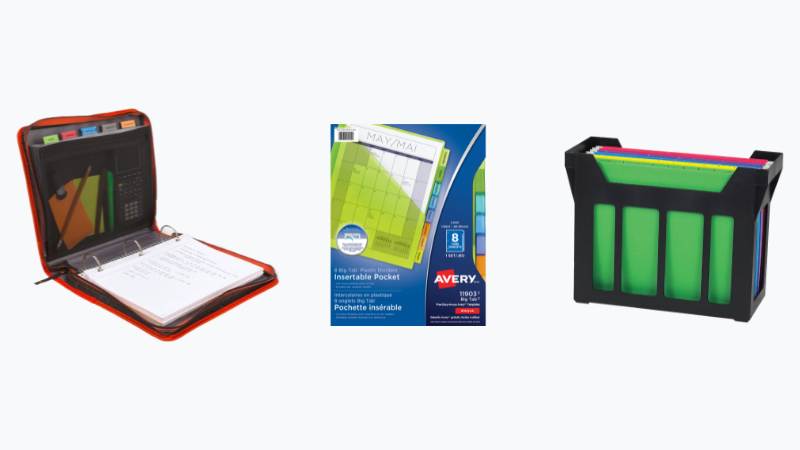
- A binder that closes securely and fits the papers your child uses.
- A divider with a pocket for each subject.
- A place to record assignments and due dates, such as the school's planner.
- A folder or file box at home for work that must be kept but doesn't need to travel.
Use supplies you already have where you can. Colour coding is optional. Clear labels and pockets your child can open matter more than a matching set.
Invite your child to choose the labels and colours. Then ask them to show you where a new worksheet would go. That gives you something useful to check before the school week starts.
How to set up the binder
Give each subject a home
Label a divider for each subject. Keep the current unit behind it. Agree on an order, such as newest work at the front, and use that order across subjects.
Keep the planner where your child can reach it without unpacking the whole binder.
Make current work easy to spot
Mark the front pocket of each subject divider with HOMEWORK or TODAY. Put work that needs attention there. If a pocket has two sides, one can hold work to do and the other can hold work to hand in.
Use labels that match the school's routine. "Finished" and "handed in" are different steps. A completed worksheet can still be sitting in a backpack.
Keep older work at home when allowed
At the end of a unit, check what the teacher wants kept for class or exams. Move suitable review papers to a labelled folder at home. Recycle only what no longer needs to be kept, following school guidance.
If the binder is hard to close, review what it contains before asking your child to carry more.
A worked example: one maths worksheet
Here's a made-up example you can adapt with your child.
| Moment | Where the worksheet goes | What to check |
|---|---|---|
| The teacher gives it out | Maths HOMEWORK pocket | Record the task and due date |
| Homework starts | On the desk, beside the instructions | Check which questions are assigned |
| The work is complete | Maths HAND IN pocket | Pack the binder for the next school day |
| The teacher returns it | Behind the maths divider | Keep it if it will help with review |
Practise that route once with a spare sheet. Your child can explain the steps while you follow along. If a step is awkward, change it together.
For work that's easy to find but still takes a long time, see why homework can take longer than expected. A paper system and a homework routine solve different parts of the evening.
Build a short reset into the day
Choose an existing moment, such as packing the school bag, to check the pockets and planner together.
- What needs to go back to school?
- Is any loose paper missing a home?
- Does the planner match the work in the pockets?
- Is there something we need to ask the teacher?
Start with enough adult help to make the steps clear. Let your child take over parts they can manage, and check back on what still needs support.
You can put the reset steps on a small card or a whiteboard your child will see. Keep the list short enough to use.
What does research tell us?
In a study by Howard Abikoff and colleagues, children in grades three to five with ADHD took part in a structured program for organization, planning and time management. The skills program improved several school and homework measures compared with a waiting list.
The program involved repeated sessions, practice and adult support. It wasn't a test of a binder by itself. It doesn't establish that this particular binder setup will improve grades or attention.
Treat your setup as a practical trial. After a week, ask: Could we find the right papers? Did completed work reach school? Which step still needed help? Those observations can guide the next adjustment.
When the system needs more support
If papers still go missing, look at one handoff: receiving the sheet, packing it, starting the work or handing it in. Check that the instructions and school expectations are clear.
You can also explore Kaizen's one on one coaching. A consultation is a chance to learn how the program works and whether it's a fit for your family.
Kaizen's educational coaching supports practical goals. It doesn't replace diagnosis, therapy or medical care. For concerns about your child's health, speak with a qualified clinician.
Common questions
Does my child have to use just one binder?
No. Follow school requirements and choose a size and weight your child can manage. Two smaller binders may fit their timetable better.
What if most assignments are online?
Use the binder for papers that still travel between home and school. Keep full digital instructions in their existing school system and agree on one place to check due dates.
How do we know whether the system is helping?
Check whether your child can find current work, bring the right papers home and hand completed work in. Note which steps still need help and adjust one part at a time.